A Thousand Whales.One Man. For What?
An independent investigation · Hvalfjörður, Iceland
—
Est. 2006 — ongoing

The hunting grounds, west of Iceland
Scroll ↓
The catcher ship Hvalur 8 — built 1948 — puts a harpoon into a fin whale, the third kill of the resumed season. The explosive grenade on its tip is meant to kill in seconds. The whale dives.
It doesn't end. A second harpoon, thirteen minutes in. A third, seven minutes later.
The fourth harpoon. The whale has taken 31 minutes to die. Iceland's food and veterinary authority, MAST, opens an investigation into the length of the dauðastríð — the death-struggle. Its director calls it "longer than desirable." On 17 July it closes the case: no breach of the law. mast ↗
That was one whale, in the first week of the resumed season. Since 2006 there have been more than a thousand — landed by one company, run by one man.
A fin whale, drawn to scale — the second-largest animal ever to have lived.
 1.8 m
1.8 m

“The greyhound of the sea” — fast enough to outrun sail-era whalers. Only engines and grenade harpoons caught up.
The oldest recorded fin whale — 94 — was aged off Iceland. A whale killed in 2026 can be older than the company that killed it (Hvalur hf., founded 1947).
As much as a dozen African elephants.
The heart alone can weigh more than two grown men — pushing blood through an animal as long as the section you're scrolling.
A decade to mature, most of a century to live out. Twenty-one of the whales killed this season were pregnant, by the whaling company's own reports; seven of the calves were documented from the shore. A gunner cannot know before he fires; MAST's inspection reports have no line for it either.
An explosive grenade on a 50 mm steel shaft — fired to reach the heart.
One more measure, because metres don't capture it. The oldest fin whale on record — 94 years — was aged in Icelandic waters. Hold that one life against the industry: a whale of that age swimming off Iceland in 2026 drew its first breath around 1932 — fifteen years before Hvalur hf. existed. It was grown when a thirteen-year-old Kristján Loftsson first went to sea as his father's lookout; middle-aged when the ships were sunk at the dock; old through the moratorium, the resumption, the suspension. Hvalur's whole hunt fits inside the lifetime of a single fin whale. A bill to ban the hunt is due in parliament in February 2027. If it passes, the industry ends inside the same lifetime.
nammco ↗ · noaa ↗ · whale & figure: original illustrations for this piece
Augmented reality Put this whale in your street → True scale — 20 metres, on your phone, no app needed. It will not fit.One of the loudest voices in the ocean sits below the floor of human hearing.
fin whale 20 Hz pulses, SOSUS receivers, eastern north atlantic, played at 10× speed · sound © cornell lab of ornithology, bioacoustics research program ↗, used with permission · loudness & hearing range: dosits ↗
Every summer the fin whales come to the same waters off Iceland to feed — reliably, in numbers. That reliability is what a hunt needs. Where they spend the rest of the year, no one has established.
The entire fin-whale hunt belongs to a single company, Hvalur hf. — founded in 1947 by two shipping men, Loftur Bjarnason and Vilhjálmur Árnason. Kristján Loftsson, Loftur's son, inherited it in 1974 and has run it ever since — more than fifty years. He is 83. He started at thirteen, as a lookout on his father's catcher.
“We can carry on hunting for ever.”
— Kristján Loftsson to The Guardian, 2023The last big delivery — 2,576 tonnes, landed at Shimonoseki in 2023 — was partly still in Japanese freezers in September 2026, its buyer said, after an estimated $700,000 in storage fees. Japan's whaling company, Kyodo Senpaku, has said it will not import from Iceland, and in August 2026 Hvalur stopped selling there. kyodo news ↗ · vísir ↗ awi ↗
He has called whales “just another fish,” and when critics compare him to Captain Ahab he calls it “an honour.” When the numbers finally turned against him he cancelled the 2024 and 2025 seasons and admitted the hunt was “no longer economically viable” — then, in June 2026, sent the ships out anyway. The market hadn’t recovered. A caretaker government had given him a rolling licence in December 2024, and a ban was coming. Given one last legal window, he took it, and 93 fin whales with it. If the ban becomes law, he says, he will sue the state. In September he sent his son, Loftur Kristjánsson, to the International Whaling Commission (IWC) meeting in his place. vísir ↗ · smh ↗
The structure. The hunt is one part of Hvalur hf. For years its losses were absorbed by Hvalur's other holdings, chiefly a large stake in the fishing giant HB Grandi.
In April 2018 the family sold that fishing stake for about $215 million, and the hunt has run off the proceeds since. None of it is illegal. It is ordinary loss-offsetting inside a private fortune. We found no public subsidy. wdc ↗ · nasdaq (primary) ↗
Sea Shepherd operatives sink half of Iceland's whaling fleet at the Reykjavík dock — Hvalur 6 and Hvalur 7 — and sabotage the Hvalfjörður station. The sunk ships are refloated but never whale again. The other half of that fleet, Hvalur 8 and Hvalur 9, built in Norway in 1948 and 1952, are the ships that killed the 93 of 2026. hvalur 8 ↗ · hvalur 9 ↗
Paul Watson flies to Reykjavík demanding to be charged. Iceland interrogates him overnight, deports him, and declares him persona non grata — rather than give him a courtroom.
As Hvalur sails again, Watson's ship Bandero makes for the whaling grounds under “Operation 86” — skippered by Rod Coronado, one of the men behind the 1986 sinkings. Loftsson, for his part, now accuses MAST of leaking his ships' positions to the activists. vísir ↗ · vísir ↗
The Bandero crosses the twelve-mile limit and makes for Hvalur 9; her crew, the coast guard says, tries to foul Hvalur 9's propeller with nets. The captain ignores orders to leave and to stop his engines, and near midnight the national police special unit is flown out and boards the ship. The captain is arrested and the Bandero is brought in to Reykjavík. In 1988 Iceland deported Watson rather than try him; this time it took his ship. vísir ↗ · mbl ↗
The licence. It was signed on 5 December 2024 by Bjarni Benediktsson — sitting Prime Minister, and acting Minister of Food after the Left-Greens walked out and the coalition collapsed. Five days earlier the country had voted. It runs five years and is extended by a year at the end of each one, so under the present law, the industries minister says, it never runs out: up to 209 fin whales a year to Hvalur hf., and 217 minke whales to Tjaldtanga ehf. Bjarni's account is that this was not a political decision, that it followed the applicable law and the required consultation, and that it was time to decide even though the government's tenure was nearly over. rúv ↗
The aide. Three weeks before the signature, Bjarni announced that Jón Gunnarsson would have nothing to do with whaling licence applications. Jón was Bjarni's assistant inside the ministry, appointed, Bjarni said, only to support him during the caretaker government, with no authority to finalise any decision. What prompted the announcement was a recording of Jón's son. iceland review ↗
The recording. Gunnar Bergmann — Jón's son, and a former chairman of the whale hunters' association — was recorded over two meetings by a man presenting himself as a Swiss property investor. On the tape, published by Heimildin, he describes his father accepting a low place on the electoral list in exchange for the ministry post, and says the licence had to be issued before the election so that it would survive a change of government. All three deny it: Bjarni says he made no such agreement, Jón says the questions have no basis in reality, and Gunnar says he was exaggerating for the investor's benefit. heimildin ↗
Who paid for the tape. The investor worked for Black Cube, the Israeli private-intelligence firm. Its own adviser Giora Eiland told the Israeli outlet Ynet that the firm had been hired by Icelandic and foreign conservation organisations, and that this was paid work — the surveillance was commissioned by the side that wants the hunt stopped. The Director of Public Prosecutions said the matter was not before her office; the national police commissioner said it would look into the circumstances, but that no investigation was under way. mbl ↗ · mbl — saksóknari ↗ · ynet ↗
Whatever was or was not agreed, the licence itself is not in dispute. It rolls forward a year at a time, and it was the legal authority for every whale killed in 2026.
Whaling is defended as an old Icelandic tradition. Here is every era of whaling in Icelandic waters, dated.
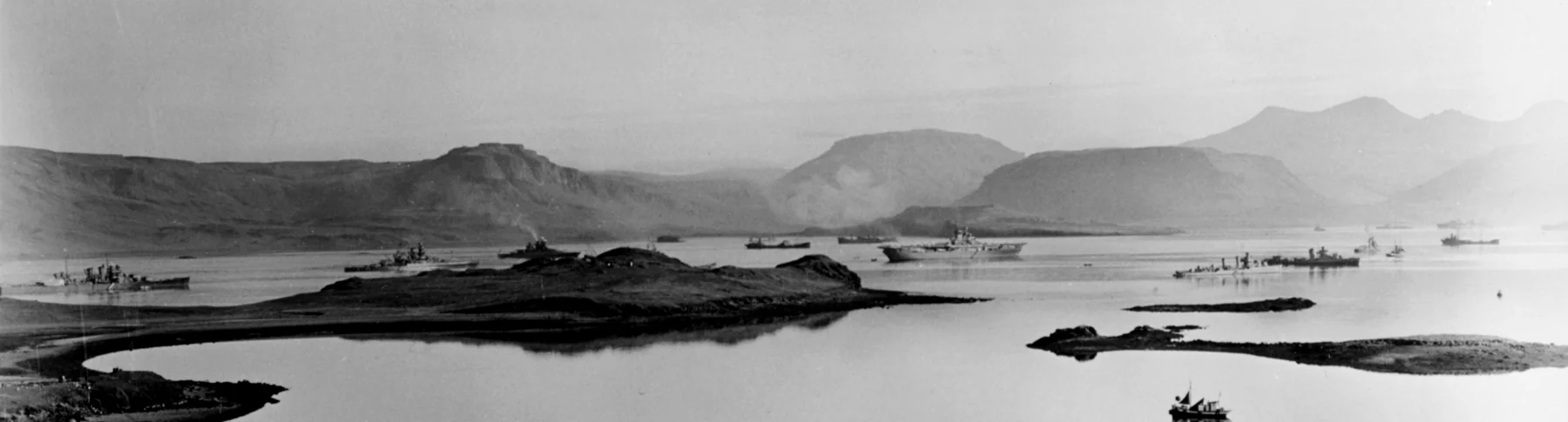
The hunt that operates today dates from 1948. It is younger than the oldest fin whale recorded in these waters.
Whaling loses money — even its owner says so. The open questions are how much, and who pays.
From 2012 to 2020, by an audit of its accounts, whaling cost Hvalur hf. more than it earned by
— about $25 million, covered by the owner's private fortune. vísir ↗
Whaling has never earned its keep; the fortune around it covers the shortfall year after year.
At the peak it was up to a third of all the meat the country ate. Japan was Iceland's only buyer. Nothing has been shipped there since December 2022, and in August 2026 Hvalur stopped selling to Japan. nippon.com ↗
The whales die a few hours west of here. The meat sailed 8,800 km to a country that has almost stopped eating it.
Killed on the grounds west of Snæfellsnes. Winched ashore at Hvalfjörður — the last fin-whale station on Earth. Frozen. Then, until 2023, the long haul to Japan: refused in Europe's ports, sent around Africa, sent through the Arctic. In 2013, Hamburg customs pulled six containers of it off a ship after the paperwork called it, in places, “frozen fish” — the meat went back to Reykjavík, and both carriers involved, Evergreen and Samskip, said they would never ship whale meat again. wdc ↗ · greenpeace ↗
Set the ethics aside for a moment and just price the animal both ways — dead, as meat; alive, as a working part of the ocean.
IMF estimate across its lifetime — carbon capture, fisheries, ecotourism. A model figure, not a market price; discount it hard and it still dwarfs the meat.
Gross average as meat, 2009–2017, from Iceland's own government-commissioned report — before the losses above.
Since the last cargo, sales have all but stopped. In the year to September 2025 Hvalur made a profit of ISK 1.7bn, mostly by selling shares, and paid ISK 1bn in dividends. vísir ↗ · fiskifréttir ↗ · mbl ↗ · vb ↗
The hunt lost a billion krónur; the group still booked three — almost none of it from whaling. The losses disappear into the fortune around them.
What the whale becomes. The red meat and blubber are documented as kept — frozen at Hvalfjörður and, until 2023, shipped to Japan. Along the way, Icelandic fin whale has surfaced as dog treats (withdrawn within hours when the origin was confirmed), a novelty “whale beer” brewed with testicles smoked in sheep dung, and iron supplements: announced in 2018, revived in August 2026 as Hvalur's plan for the meat. From one 2026 whale the station took 600 litres of blood for haemoglobin, MAST's report records. The fate of the rest of a 70-tonne animal is not on the public record. awi ↗ · wdc ↗
The strongest counter-argument, shown and dated: a 2018 University of Iceland report, commissioned by the fisheries ministry, called whaling “economically beneficial to Iceland overall.” It runs on 2017 data, reports gross revenue rather than profit, and predates the demand collapse, the welfare suspension, and Loftsson's own admission that the hunt is no longer viable. Since then the company answered the question itself, by cancelling two seasons in a row. icelandreview ↗ · icelandreview ↗
And this is where it ends: a freezer in Shimonoseki. Some of the last cargo is there still.
In February 2023 a refrigerated cargo ship, the Silver Copenhagen, landed Iceland's entire 2022 catch here — 2,576 tonnes of frozen fin whale, the output of 148 animals. It was the last. Japan's own whaler, Kyodo Senpaku, has hunted fin whales itself since 2024, and in August 2026 Hvalur said it would stop selling to Japan.
Getting it here takes chartered ships and improvised routes. In 2015 the Winter Bay sat two months in a Norwegian port with some 1,800 tonnes aboard, then crossed the top of Russia behind an icebreaker — the first cargo of its kind through the Northern Sea Route, chosen because the normal ways were closed. arctic portal ↗ · fortune ↗ · eia ↗
What is left of the demand fits in a vending machine.
Japan's whaler turned to unmanned vending machines to move the meat — sashimi, steak and canned whale, sold where no shopkeeper has to stand behind it. A hundred locations were promised within five years. Five opened; by the summer of 2026 the industry's own store listings carried one.
In 2013, Icelandic fin whale surfaced in Japan as dried dog treats. When campaigners published the origin, the manufacturer pulled the product within hours — a market so embarrassed by the cargo it wouldn't feed it to pets.
At home, a brewery smokes whale testicles in sheep dung for an annual novelty “whale beer” — and Loftsson has said his catcher ships ran on a blend of 80% diesel and 20% whale oil, rendered from the catch. In August 2026 Hvalur said the meat would become an iron powder in capsules, Reyðarjárn. That — a vending-machine chain shrunk to one shop, a withdrawn dog treat, a stunt beer, fuel for the ships that hunt, an iron powder — is what is left of the industry a fin whale dies for.
nbc ↗ · kujira-town ↗ · awi ↗ · mst ↗ · wdc ↗
The hunt does not pay. So what exactly is destroyed each time a ship goes out?
Dying naturally, a whale goes down — and gives for decades. Cast ashore, it was hvalreki — the godsend that fed the coast for centuries. Harpooned, it goes up a ramp and gives nothing.
A fin whale dies at sea of old age, after eighty or ninety years. The body, too heavy to float for long, begins to sink.

Greenland sharks — the same slow, ancient fish Icelanders bury and ferment into hákarl — arrive to strip the soft tissue, alongside hagfish and swarms of amphipods. It is tonnes of food at once, in a place that normally lives on the crumbs drifting down from far above; one surveyed skeleton carried 12,490 organisms. greenland shark ↗

Hagfish — the “slime eels” of the North Atlantic — knot into the body; bone-eating Osedax worms bore into the skeleton, and sulphur-loving bacteria break down the fats locked in the bone for 50 to 100 years. More than 400 species have been counted on fallen whales — some found living nowhere else on Earth.
A single great whale carries roughly 33 tonnes of CO₂ to the seafloor — locked away for centuries. Set against global emissions it is a small amount, and no one serious claims whales alone would cool the planet. But it costs nothing, it repeats with every natural death — and none of it happens when the animal is hauled up a ramp instead.

Winched tail-first up the slipway at Hvalfjörður — the last fin-whale station on Earth — and taken apart in hours. The meat goes to a freezer. In 2026 there is no buyer: about 1,000 tonnes sit unsold in cold storage, by the company's own account. Nothing reaches the seabed.
33 t of CO₂ locked on the seafloor; an ecosystem runs on the fall for years.
Cut, boxed and frozen, for no buyer.
Set the money aside. This is the cost that never shows up in an account — measured by the state's own veterinarians, who timed 58 of the last 64 killings of 2022.
MAST 2022 monitoring, via EIA ↗
When death wasn't instant, the median time for a fin whale to die was
— an average of 17 minutes; the worst recorded cases took up to two hours.
The grenade harpoon was designed and proven on minke whales, five to ten tonnes. A fin whale can weigh ten times as much, and from a moving ship the grenade often misses the spot that kills.
The state's own conclusion
In June 2023, citing MAST's 2022 report, Iceland's fisheries minister suspended the hunt — on welfare grounds. Iceland's Expert Advisory Board on Animal Welfare had already found that hunting an animal this size cannot comply with the Animal Welfare Act. Stricter rules in 2023 lifted the instant-death rate to 71% — but roughly three whales in ten still didn't die at once. wdc ↗ · wdc, 2023 season ↗
Even “instant” is generous. The international test for a dead whale measures when the mouth slackens, the flipper drops and movement stops. These are signs that the whale has stopped moving; they say nothing about when it stops feeling. Since 1995 the International Whaling Commission has called its own criteria “incomplete and sometimes misleading.”
You have been reading about one whale. This is all of them.
The chart starts in 2006, when Hvalur hf. resumed fin whaling. The same company hunted from the Hvalfjörður station from 1948 to 1989 and took thousands more. wikipedia ↗
fin whales killed since 2006 — a thousand of them by the end of 2022 alone. Each blank stretch is a season the ships stayed in harbour, usually because nobody was buying. The 2026 season ended on 20 September: 93 killed, two of them harpooned and lost at sea. By Hvalur's own catch reports, 21 were pregnant. wdc ↗ · iwc data ↗
Support has fallen from 57% in 2013 to 33%; opponents now outnumber supporters.
Gallup for IFAW, 2013 · Maskína for IFAW, May 2022 · Maskína for INCA, April–May 2026. The rest each year were undecided. icelandreview ↗
The strongest counter-argument — and our answer
The strongest defence leaves money out: this is a legal hunt, on Iceland's own terms, with Iceland's own money, within a stock that isn't endangered — and no foreigner gets a vote. Every word of that is true. The North Atlantic fin whale is not about to go extinct; the stock runs to roughly 79,000, and the Marine and Freshwater Research Institute judges the catch sustainable. (The 2024 licence permits up to 209 fin whales a year; the institute advised a lower cap of 150 for 2026.) And a man is free to spend his fortune as he likes.
Iceland has already answered it.
Iceland's own veterinarians timed the deaths. Its welfare board found that this hunt cannot comply with the Animal Welfare Act. Its industries minister says the bill due in February 2027 will ban whaling, on two grounds: animal welfare and the country's trade interests. mfri ↗ · nammco ↗ · vísir ↗
The money and the market on this page were the same in April 2025, when Loftsson cancelled the season, as in June 2026, when he sent the ships out again. The hunt went ahead because one man wanted it to.
This page was assembled in July 2026, in Hvalfjörður — a hundred metres from the water, ten minutes from the station — while the ships were out. The catchers pass in front of the window. Nothing in it was hidden: the accounts were filed, the deaths were timed by the state's own inspectors, the empty market was public record. Whatever happens this autumn, whoever reads this later: it was all known, while it was still happening.
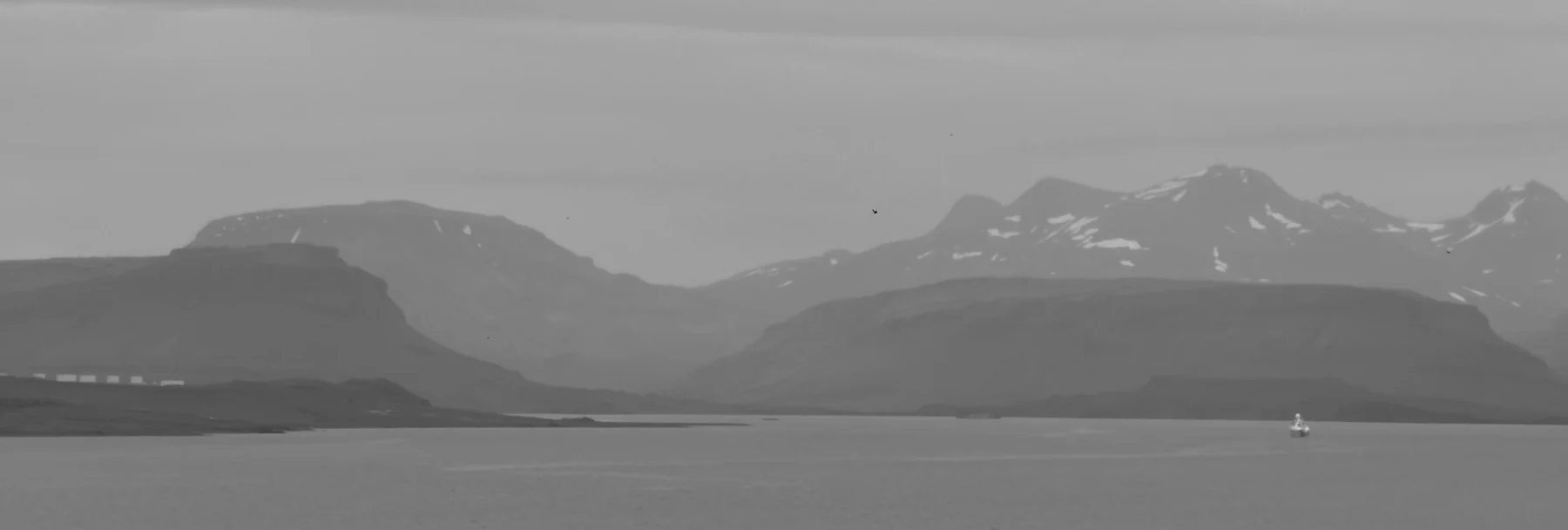
A bill is due in February 2027. The minister says it will ban whaling; Loftsson says he will sue. Until parliament passes it, the licence renews every year.
Every figure above survived adversarial, multi-source verification. These didn't — including some that would have helped the argument. They're listed so you can trust the rest.
The bill is due in February.
The ships are laid up in Reykjavík.
